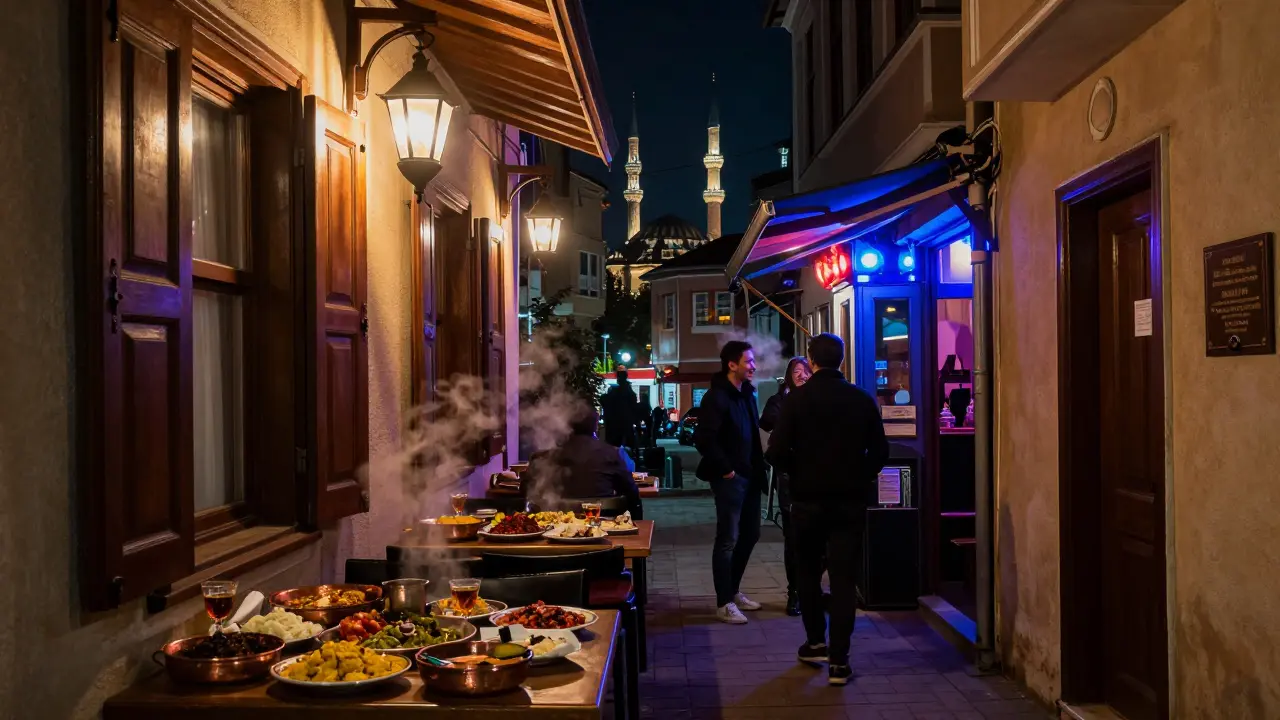
When the sun sets over the Bosphorus, Istanbul doesn’t sleep-it transforms. One moment you’re walking past centuries-old minarets, the next you’re in a basement bar where electronic beats mix with the sound of ney flutes. This city doesn’t just offer nightlife; it layers it. Tradition doesn’t fade here-it dances.
Where Old Meets New: The Soul of Istanbul After Dark
Istanbul’s nightlife isn’t about choosing between ancient and modern. It’s about experiencing both at the same time. In the narrow alleys of Beyoğlu, you’ll find a traditional Turkish meyhane serving rakı and meze just steps away from a neon-lit club playing techno from Berlin. The same person who sipped tea with their grandfather at sunset might be dancing until dawn in a rooftop lounge with panoramic views of the Golden Horn.
This isn’t coincidence. It’s culture. Istanbul’s identity as a bridge between continents has shaped its nights. The Ottoman Empire’s meyhane culture-where friends gathered to drink, talk, and listen to music-didn’t disappear. It evolved. Today’s versions still serve meze platters of grilled eggplant, stuffed grape leaves, and spicy anchovies. But now, they also have craft cocktails made with Turkish herbs like sumac and thyme.
The Mezze and the Mixology: Food as the Foundation
You can’t talk about Istanbul’s nightlife without talking about food. Unlike cities where nightlife means drinks first, here, the meal is the start. In Kadıköy, on the Asian side, locals crowd into tiny lokantas after 10 p.m. These aren’t restaurants-they’re neighborhood kitchens where you order from a chalkboard menu of daily specials: lentil stew, sautéed zucchini with garlic, or grilled mackerel with lemon.
On the European side, places like Çiya Sofrası in Kadıköy and Asitane in Beyoğlu serve Ottoman-era recipes that haven’t changed in 200 years. But in the same district, bars like Bar 1923 and Peri serve cocktails inspired by those same dishes. Think a gin-based drink with rosewater and pomegranate molasses, or a sour made with şıra, a fermented grape juice that’s been drunk since Byzantine times.
The Music That Moves the City
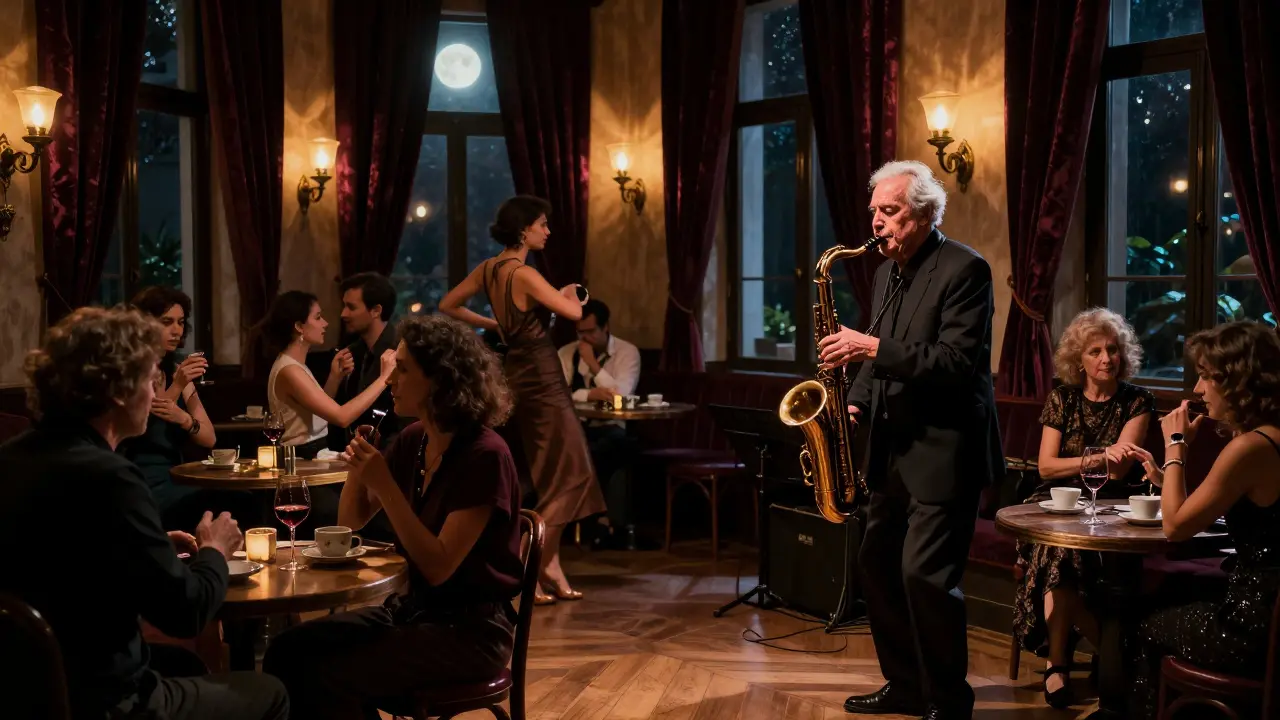
Music in Istanbul doesn’t stay in one genre. It hops between centuries. In the historic district of Cihangir, you’ll find fasıl sessions-live performances of classical Ottoman music with oud, kemençe, and darbuka. These aren’t tourist shows. They’re gatherings of musicians who’ve been playing together for decades. You’ll hear a 70-year-old man play the kemençe with the same intensity as a 25-year-old DJ spinning house music upstairs.
Down the street, Barbarossa hosts weekly Arabesque nights where singers belt out emotional ballads from the 1980s. Crowds sing along, holding glasses of tea or whiskey. Meanwhile, in Karaköy, Walter’s and Boiler Room bring in international DJs who’ve played in Berlin, Tokyo, and London. The crowd? A mix of students, expats, and Turkish professionals who’ve worked all day and now need to let go.
Where the Locals Go: Beyond the Tourist Zones
Most guidebooks point you to Istiklal Avenue. But the real nightlife lives elsewhere. In Nişantaşı, you’ll find intimate wine bars like Çiçek Pasajı, where the walls are lined with bottles from Thrace and the Aegean. The staff knows your name by the third visit. In Beşiktaş, Çıkmaz is a hidden jazz club tucked into a 19th-century mansion. No sign. Just a small door. You need a friend to get in.
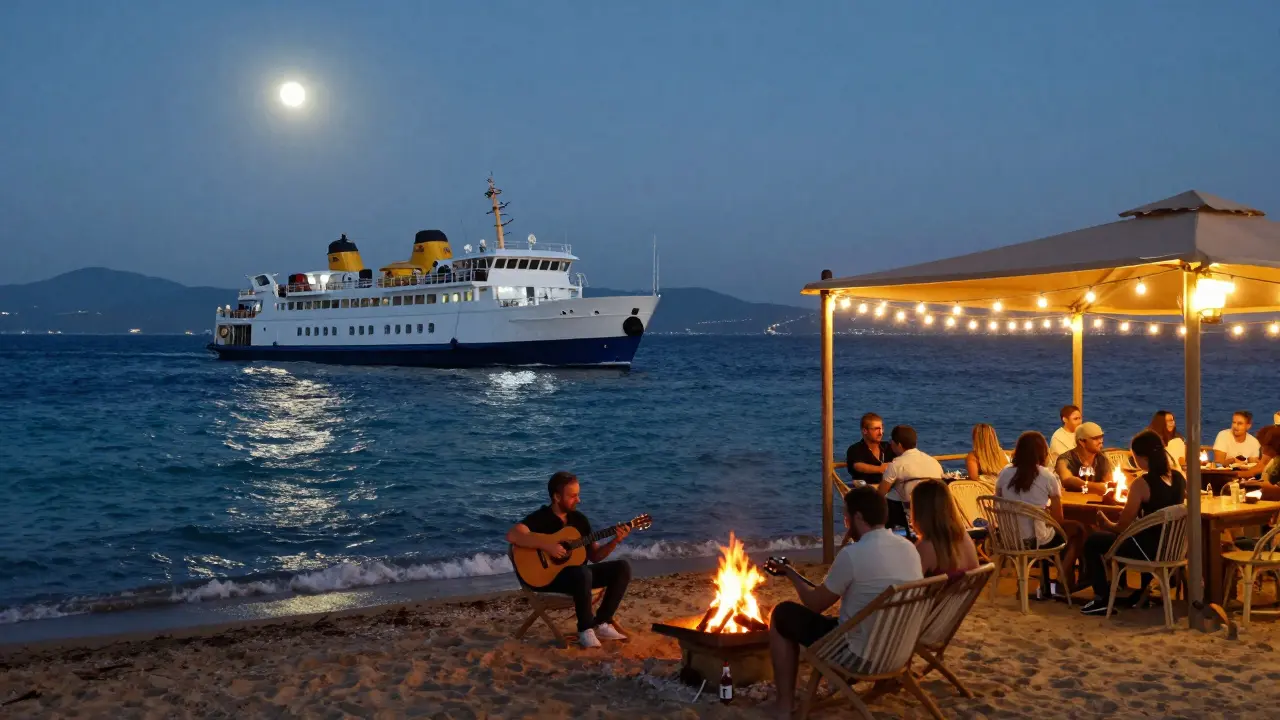
On weekends, locals head to the Princes’ Islands. Ferries leave from Kadıköy after 10 p.m. On Büyükada, you’ll find beach bars with hammocks, live acoustic sets, and fire pits. No cars. Just moonlight, the sound of waves, and a bottle of local wine. It’s the closest thing Istanbul has to a secret.
The Rules You Won’t Find in Guidebooks
There are unwritten rules here. Don’t order a beer before 10 p.m. in a meyhane-it’s considered too early. Don’t wear flip-flops to a high-end lounge in Nişantaşı. And never, ever ask for a “Turkish night” show. Those are for tourists. The real thing happens in places with no signs.
Also, cash still rules. Many bars, especially the smaller ones, don’t take cards. Keep 200-500 Turkish lira on you. And if someone invites you for a drink, say yes. Refusing can seem rude. A glass of rakı or tea is a gesture, not just a drink.
What to Expect: A Night That Changes You
Istanbul’s nightlife doesn’t follow a script. One night, you might end up in a rooftop bar with a view of the Blue Mosque, sipping a çay with a Turkish poet who’s just published their first book. The next, you’re in a 24-hour lokanta in Eminönü, eating simit and watching fishermen cast nets under streetlights.
The city doesn’t care if you’re a backpacker, a CEO, or a retiree. It welcomes you into its rhythm. And if you’re lucky, you’ll leave not just with photos, but with a new way of seeing night-not as the end of the day, but as another layer of life.
Is Istanbul’s nightlife safe for solo travelers?
Yes, Istanbul’s nightlife is generally safe for solo travelers, especially in well-lit areas like Beyoğlu, Karaköy, and Kadıköy. Police presence is visible on weekends, and most bars and clubs have security. Still, avoid poorly lit alleys after midnight, and never leave drinks unattended. Locals are often helpful-if you look lost, someone will likely ask if you need help.
What’s the best time to experience Istanbul’s nightlife?
The real nightlife starts after 10 p.m. and peaks between midnight and 3 a.m. Mezhanes and traditional spots open around 8 p.m., but the energy shifts after midnight. Clubs don’t fill up until 1 a.m., and many don’t get busy until 2 a.m. Weekends are livelier, but Wednesday and Thursday nights offer a quieter, more local vibe.
Do I need to speak Turkish to enjoy Istanbul’s nightlife?
No, but knowing a few phrases helps. Most bartenders and staff in tourist areas speak English. In local spots, a simple “Merhaba” (hello), “Teşekkür ederim” (thank you), and “Ne var?” (What’s good?) can open doors. Many places have picture menus. And if you’re unsure, point to what others are ordering-it’s a universal language.
Are there any dress codes for Istanbul’s clubs?
It depends. Upscale lounges in Nişantaşı and Karaköy expect smart casual-no shorts, flip-flops, or tank tops. Most clubs in Beyoğlu are more relaxed, but avoid wearing gym clothes. On the Asian side, especially in Kadıköy, jeans and a nice shirt are fine. For traditional meyhanes, anything clean and neat works. When in doubt, lean toward slightly dressed-up.
Can I find vegan or vegetarian options in Istanbul’s nightlife?
Absolutely. Turkish cuisine is naturally rich in plant-based dishes. Meze platters often include hummus, stuffed peppers, eggplant salads, and lentil soups. Many meyhanes now label vegan options. In Beyoğlu and Kadıköy, places like Vege and Plant specialize in vegan Turkish food. Even traditional spots like Çiya have vegan meze menus. Just ask for “vejeteryen” or “vegan.”